Views of Sierra Nevada from Alhambra
I boarded the C30 bus from Isabel Catolica Square just up from the cathedral in Centro. The vehicle was much smaller than a London Hopper or school minibus, and, with only a few seats, most of us had to stand. As we climbed the steep hill we craned our necks to get glimpses of the old Jewish quarter.
On alighting the bus, I had a black americano at the La Mimbre restaurant. Spanish couples alongside had breakfast and coffee then left. Warm rays of sunshine, soaking into my skin in March, kept me longer.
On entering the Alhambra I walked by the southern fortresses thinking about ancient battles and dungeons. Another lone tourist or guided group occasionally passed me by. On the path toward the palace, I stopped where the tour group in front had paused. The point of interest was The Sierra Nevada.
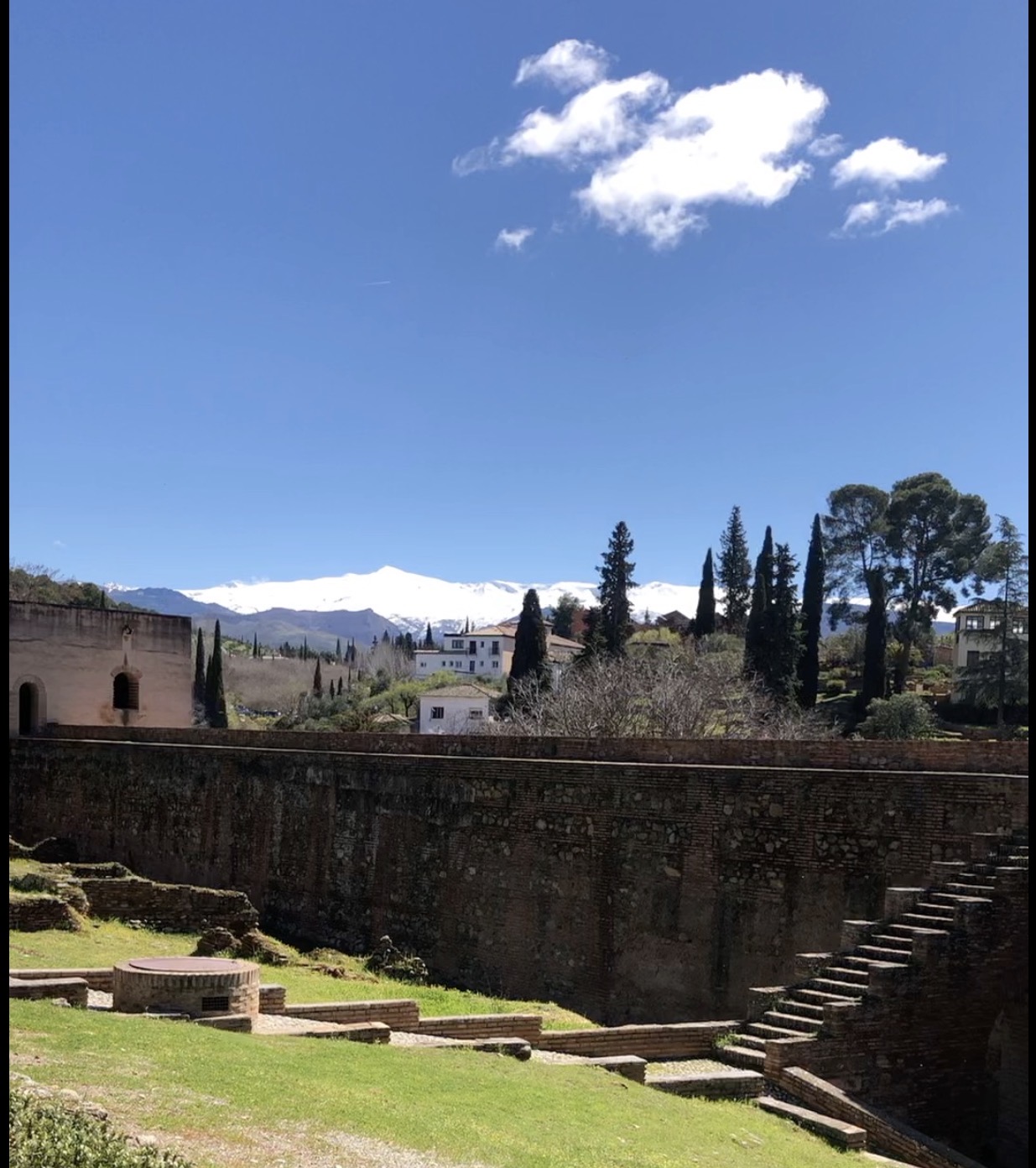
Hislop mentions the Sierras seven times in The Return. They are referred to as: a prize belonging to the inhabitants; a dramatic focal point; and a place of fond family memories, but also an obstacle.
I took a photo. The entire top was covered in snow and difficult to distinguish from white clouds.
Nasrid Palaces
Continuing down through the cypress arches I passed through an opening in the groomed hedges. Here I sat quietly on a stone bench to relax enjoying the sun and orange trees already in fruit before walking away from the place of towers toward the Nasrid Palaces.
On reaching the area around Charles V Palace it turned from military with battlements and defensive walls into a city where one can imagine an ancient rich playground filled with royalty, concubines and ancient baths. Looking out from the plaza I saw numerous buildings to investigate and teenagers directing parents so they could explore it all. Other tourists were busy with their own itineraries, audio guides or official tour guide.
I realised how little I knew about Alhambra and The Nasrid palaces; my interest had been fixed on the time of the Civil War. Washington Irving’s Tales of the Alhambra should have been on my booklist before leaving home.
Google Maps was already frustrating me, so I wandered without direction going through the Wine Gate (Puerta del Vino) and then by chance walking into the circular museum which I thought could be a bull ring. With my time slot fast approaching I asked directions and went to join the queue for the main highlight: Alhambra’s palaces and patios.

The lack of information signs suited me, as I wanted a sensory experience not a deep lesson in history.Following others to The Court of Lions, The Hall of the Two Sisters and Patio de los Arrayanes, I was mesmerised by the Islamic tiles, wood carvings and the muqarna domes which I stared at until fearing desensitisation.
Remembering Leopoldo Torres Balbas
At Huerta San Vicente I had respected a man whose life was changed by the Spanish Civil War. I did the same at Patio de los Arrayanes (Court of the Myrtles), Standing by the pond looking up toward Palace of Comares, I thanked the conservator Leopoldo Torres Balbas for his authentic restorations which have survived 100 years. His myrtle bushes are still being manicured and the pond remains still as glass.
Leopoldo Torres Balbas committed himself entirely to the renovation of the Alhambra for many years, but lost his job at the beginning of the Franco regime due to his liberal political views. The effect of the Civil War on Andalusians in The Return are fictional, but very much tied to reality.
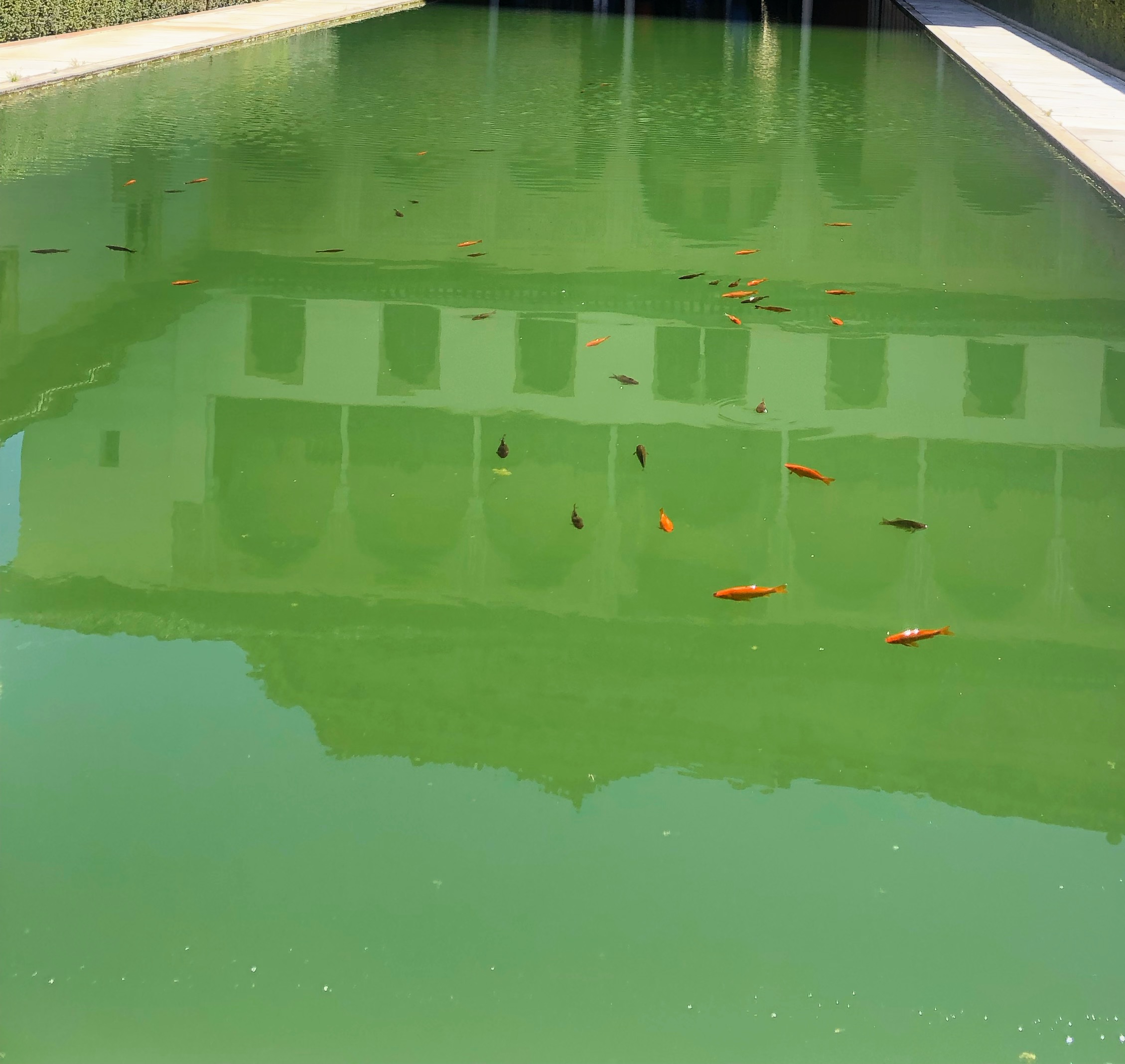
I watched the fish swim through the arches of the porticos and then congregate over the middle window.
As an Amazon Associate I earn from qualifying purchases.
Leave a Reply